
Training in the Group
Developing skills at Deutsche Telekom: Innovative, relevant, future-oriented
|
|
|
|
|
|
||||||||
Traininga through global Learning Management System (LMS) |
2021 |
2022 |
2023 |
2024 |
2025 |
||||||||
|---|---|---|---|---|---|---|---|---|---|---|---|---|---|
No. of courses |
43,772 |
43,060 |
47,005 |
61,881 |
73,693 |
||||||||
No. of digital courses |
36,251 |
36,605 |
41,268 |
57,277 |
69,138 |
||||||||
No. of on-site coursesb |
7,521 |
6,455 |
5,737 |
4,604 |
4,555 |
||||||||
No. of training days |
663,085 |
631,308 |
635,932 |
632,686 |
630,882 |
||||||||
⌀ training days per employee (FTE)c |
4.4 |
4.4 |
4.6 |
4.7 |
4.8 |
||||||||
No. of digital training days |
592,221 |
501,580 |
462,538 |
427,527 |
442,049 |
||||||||
⌀ digital training days per employee (FTE)c |
3.9 |
3.5 |
3.3 |
3.2 |
3.4 |
||||||||
Digital learning ratiod |
89 % |
79 % |
73 % |
68 % |
70 % |
||||||||
|
|||||||||||||
Deutsche Telekom’s strategic goal is to become the “Leading Digital Telco”. In order to achieve this target, it is essential for its employees to possess future-oriented skills.
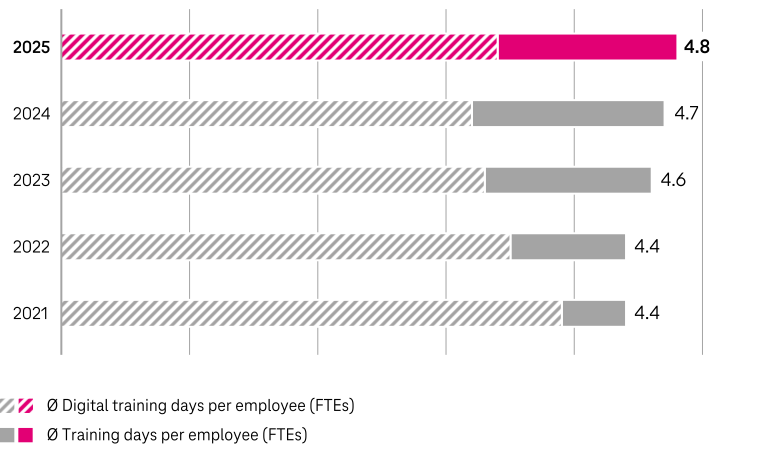
In 2025, training opportunities were expanded and strategically refined to ensure that continuous further development is embedded in the daily working routine for the long term. A total of 73,693 learning opportunities were available to employees. Digital formats that enabled participants to take part at a time and location of their choosing and learn in a flexible manner took precedence with 69,138 offerings. In-person formats were specifically reduced and, at the same time, had a more qualitative focus in order to make the added value even clearer. With 630,882 completed training days, the advanced training level in the Group remained stable. On average, each employee invested 4.8 training days in their further training during 2025.
The Group-wide learning culture initiative “welearn” encourages lifelong learning and specifically promotes skills that are crucial when it comes to digital transformation. The training platform Percipio is the central access point to all learning activities in the Group. As a high-performance digital learning environment, it pools all the available training and, in 2025, was regularly used by around 47,000 employees. In addition, segment-related talent programs focusing on future roles and management tasks were offered via Percipio and around 2,000 employees took part in them.
The peer-to-peer learning initiative “Learning from Experts” (LEX) is an established element in the company’s learning culture and has developed into an international network of knowledge exchange. With over 6,500 sessions held, informal learning from and together with experts was actively embraced across the Group in 2025.
The “Explorer Journey” digital learning journeys have also firmly established themselves within the Group. Practical knowledge on topics of strategic relevance is presented in structured learning journeys lasting several weeks. Six explorer journeys were offered in 2025. With over 17,000 instances of participation, they were well-received and demonstrate just how relevant this format is.
As part of the digital transformation, the development of skills in innovative technologies such as artificial intelligence (AI) was also consistently driven forward in 2025. With respect to learning, Deutsche Telekom is pursuing a voluntary approach that arouses curiosity, offers inspiration, and guarantees practical support. The primary focus of 2025 was the effective use of AI tools, the development of prompting skills, and function-specific training programs for various use cases. The integration of AI into the daily working routine was supported by practical learning formats. A total of 30,000 employees were trained in topics relevant to AI (further details are provided in the section on digital experts).
By continuously developing the learning environment further, Deutsche Telekom ensures that training is a strategic factor in the Group’s success. A forward-looking and needs-based development of skills ensures that employees are equipped with the decisive future skills and are able to play an active role in shaping the company’s transformation.